


Every growing business eventually hits a software decision: buy something off the shelf, customize a platform, or build a custom system. The wrong choice can lock the team into manual work, expensive workarounds, or software no one wants to maintain.
For Fresno and Central California businesses, the decision is often practical. The software has to support real operations: agriculture, transportation, professional services, e-commerce, nonprofit reporting, healthcare logistics, construction, or local service teams.
The right answer depends on how unique the workflow is and how much control the business needs.
For teams already leaning toward a build, see custom software development consulting.
Buy when the process is standard
If the workflow is common and not a competitive advantage, buy software.
Good buy candidates include:
- Payroll
- Basic accounting
- Standard CRM
- Email marketing
- Simple appointment scheduling
- Commodity project management
- Basic website forms
Buying works when the business can adapt to the software without losing much. The vendor owns maintenance, security updates, and product improvement. That is valuable.
The warning sign is when the team immediately needs spreadsheets, duplicate entry, or complex workarounds to make the purchased software fit.
Customize when the platform is close
Customization is often the best middle path. Shopify, WordPress, NetSuite, HubSpot, Salesforce, and similar platforms already solve a large part of the problem. A focused custom layer can fill the gap.
Customize when:
- The platform handles the core record type
- Most workflows fit the platform
- The missing behavior is specific but bounded
- APIs are available
- The business wants to keep vendor support for the commodity parts
Examples include Shopify checkout customization, NetSuite reporting, WordPress plugins, CRM automations, or custom dashboards around existing systems.
This is where a lot of high-value consulting lives: not rebuilding the platform, but making the platform fit the operation.
Build when the workflow is the business
Build custom software when the workflow is unique, strategic, or too expensive to force into someone else's model.
Good build candidates include:
- Custom quoting engines
- Workflow automation across multiple systems
- Industry-specific scheduling
- Data collection tools
- Internal operations dashboards
- AI-assisted review systems
- Customer portals tied to proprietary processes
The stronger the business depends on the workflow, the more important control becomes.
Ask about integration early
The buy vs. build decision often fails because integration is treated as an afterthought.
Before choosing software, ask:
- Does it have an API?
- Can we export our data?
- Can we import records safely?
- Can it trigger webhooks?
- Can it support our reporting needs?
- Who owns the source of truth?
A cheap tool without good integration can become expensive quickly.
Think in phases
The best decision may be phased:
- Buy a standard tool.
- Customize the highest-friction workflow.
- Add automation between systems.
- Build a custom module only where the business needs control.
This keeps cost aligned with learning. The business avoids a giant custom build before the workflow is understood, and it avoids being trapped by software that cannot grow.
The practical rule
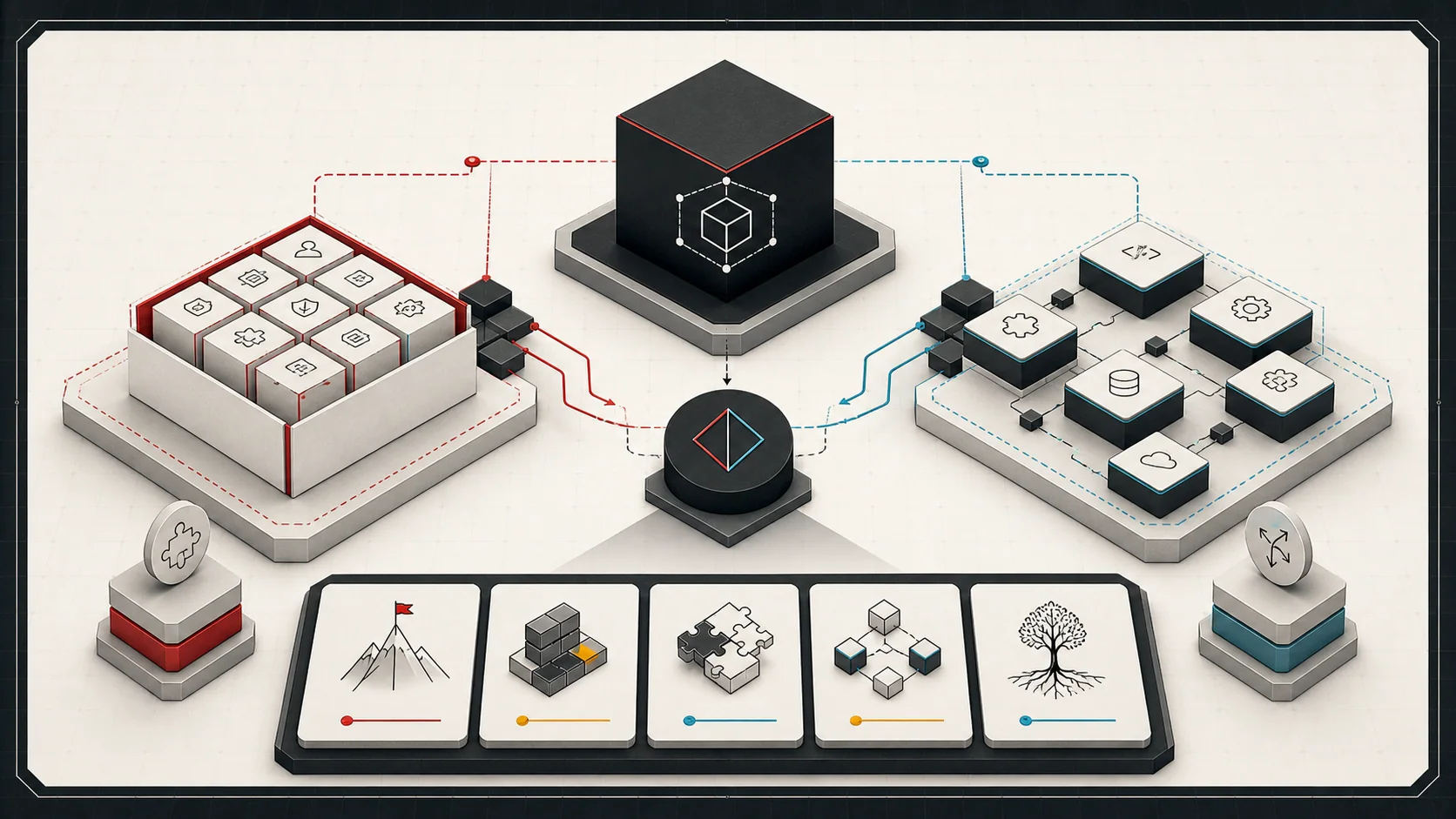
Buy commodity workflows. Customize platform workflows. Build strategic workflows.
That rule is not perfect, but it prevents two common mistakes: rebuilding what already exists and forcing a unique business process into a tool that was never designed for it.
Working through a buy vs. build decision? Software Survivor provides custom software development consulting and custom software development in Fresno, and can help you scope the smallest version worth building. Start a conversation.