


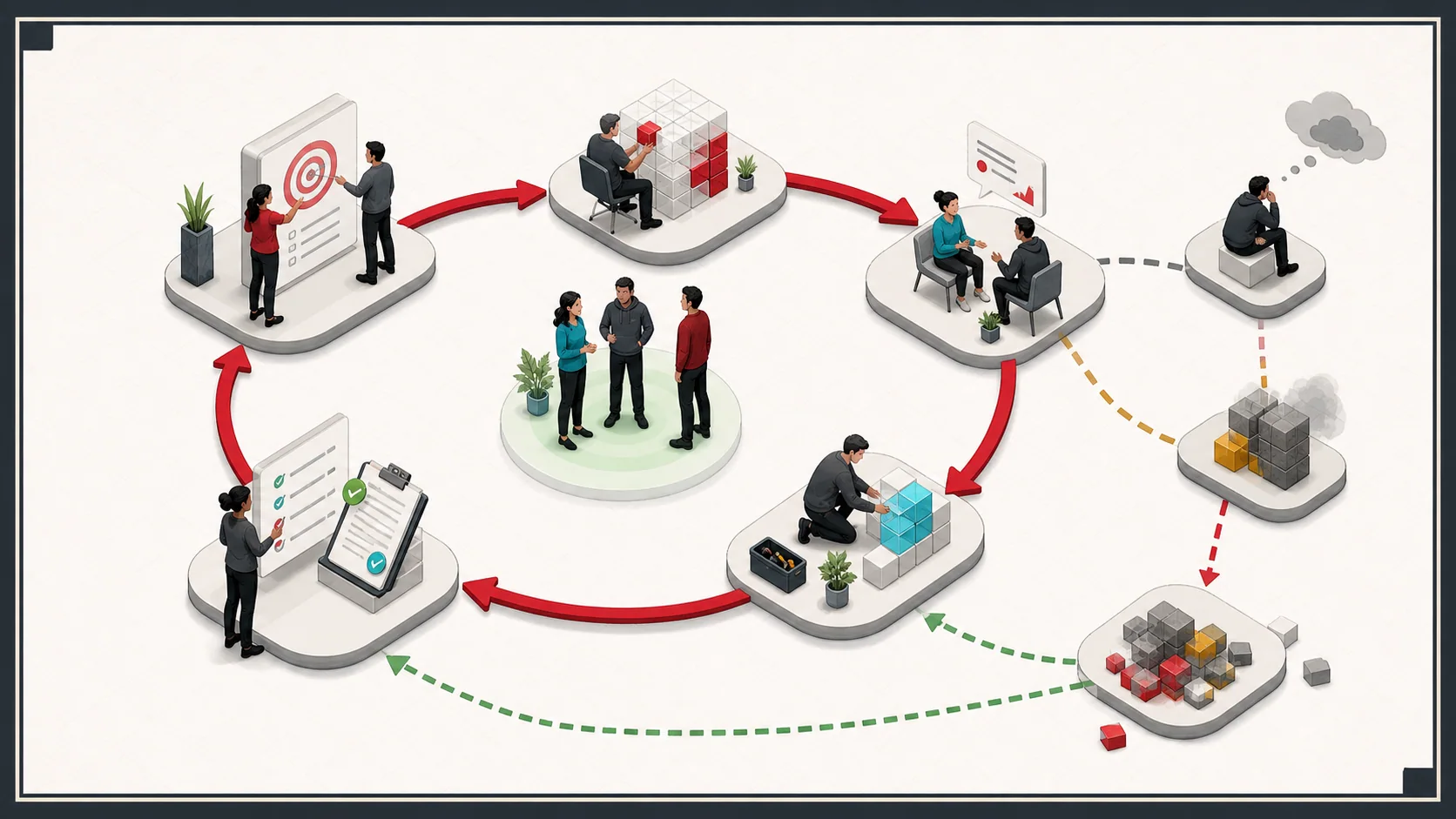
Many leadership problems get mislabeled as culture problems when they are really performance and accountability problems that no one wants to address directly.
An engineering team might describe itself as frustrated, misaligned, or low-trust. Sometimes that diagnosis is right. Sometimes the real issue is simpler: expectations are unclear, weak performance is being tolerated, and feedback is arriving too late to be useful.
That is where Andy Grove still feels uncomfortably relevant.
One of the harder truths in High Output Management is that leadership is not just encouragement and coordination. It also includes judging performance, correcting problems, and dealing honestly with the difference between potential and actual output.
For engineering leaders, that remains part of the job whether they enjoy it or not.
Ability and motivation are different problems
Not every weak outcome has the same cause.
A person may be underperforming because they do not yet have the skills for the role. Another may have the skills but lack urgency, ownership, or interest. A third may be operating under vague expectations and getting judged for a target that was never made explicit.
Those are different management problems.
Software leaders often blur them together because it is emotionally easier to say someone is "not working out" than to identify what is actually broken. But the response depends on the cause.
If the issue is ability, the leader may need to provide coaching, tighter scope, better pairing, or a role adjustment. If the issue is motivation, the conversation is different. You may need to test whether the person wants the role, understands the standard, or is still aligned with the work.
If the issue is unclear expectations, the problem may belong to management first.
Treating every performance issue the same is lazy leadership. Good managers diagnose before they react.
One-size-fits-all motivation is weak management
Engineering leaders sometimes assume that everyone is motivated by the same things they are.
That is rarely true.
One engineer wants autonomy. Another wants stronger mentorship. Another wants recognition. Another wants a bigger technical challenge. Another mostly wants stability and fewer surprises. If you manage everyone as though they are optimized for the same incentives, you will miss what actually drives behavior.
This matters because motivation affects execution. A team member who looks disengaged may be reacting to stagnant work, unclear growth paths, or a role that no longer fits. That does not remove accountability, but it changes how a leader should intervene.
The point is not to personalize management into endless customization. The point is to stop pretending that generic motivation advice is enough.
If you want better output, you need a more accurate model of the people producing it.
Feedback is not about protecting the manager
Many feedback failures are really discomfort failures.
The manager delays the conversation because they do not want to create tension. They soften the message so much that the problem becomes ambiguous. They wait for more evidence even though the pattern is already clear. Then they are surprised when the person says the review came out of nowhere.
This is not kind leadership. It is avoidant leadership.
Useful feedback is direct enough to create a signal. That does not require cruelty. It does require clarity.
An engineering leader should be able to say things like:
- "You are technically strong, but you are not creating enough alignment for the team."
- "The work is getting done, but the quality and reliability are below the level we need."
- "You are stepping into a lead role, but you are still optimizing for your own tasks instead of team throughput."
These are hard conversations. They are also operationally necessary.
When managers make feedback too vague, the team pays for it. Strong performers notice that standards are blurry. Weaker patterns continue unchecked. Resentment builds because everyone can see the issue except the person who is supposed to lead it.
Performance reviews are operational work
Many organizations treat performance reviews as a bureaucratic event. Grove's framing is more useful: performance evaluation is part of management.
For engineering leaders, that means reviews should not be disconnected from the actual system of work. They should reflect what the role requires and what the team needs.
Good review inputs usually include:
- Quality and consistency of execution
- Ability to handle scope appropriate to the role
- Communication and collaboration
- Reliability under real operating conditions
- Impact on surrounding team output
This is especially important for senior and lead roles. Technical strength matters, but leadership roles also require judgment, clarity, prioritization, and the ability to improve the work of others.
If reviews avoid those points, they stop helping the organization make decisions.
Promotions can hide leadership mistakes
One of the most common problems in technical organizations is promoting people because they were great at one job and hoping they will be great at a different job.
A strong senior engineer becomes a manager. A productive implementer becomes a team lead. A good architect gets pushed toward people leadership because there is no other prestige path.
Sometimes it works. Often it exposes a leadership design mistake.
Promotions should not just reward past contribution. They should test fit for future responsibility.
That means engineering leaders need to ask:
- Does this person actually want the next role?
- Have they shown behavior consistent with that role already?
- Are we promoting them because they are excellent, or because we do not know how else to reward them?
The promotion mistake is expensive because it creates two losses at once: the old role loses a strong performer, and the new role may gain someone who is underprepared or misaligned.
What engineering leaders should do differently
The practical lesson is not to become harsher. It is to become clearer.
Good engineering leadership requires:
- Explicit expectations
- Earlier feedback
- More honest diagnosis
- Better role design
- Accountability tied to real output
If someone is struggling, define whether the issue is skill, motivation, fit, or clarity. If expectations are vague, fix them. If feedback is overdue, deliver it. If a promotion path is poorly designed, correct the system instead of blaming the individual who stepped into it.
This is where leadership gets real. A team does not become high-performing because everyone is nice and talented. It becomes high-performing because standards are understandable, feedback is usable, and accountability is not optional.
That is not a separate HR exercise. It is part of operating a serious engineering organization.